鈥淭he development of artificial intelligence is in its infancy. When we look back at what we are doing today in 50 years, we will find it pretty primitive. In other words, most of the field remains to be discovered. That's why it鈥檚 important to lay the foundation of trustworthy AI now,鈥� says Fredrik Heintz, professor of artificial intelligence at LiU, and coordinator of the TAILOR project.
TAILOR is one of six research networks set up by the EU to strengthen research capacity and develop the AI of the future. The foundation of trustworthy AI is being laid by TAILOR, by drawing up a framework, guidelines and a specification of the needs of the AI research community. 鈥淭AILOR鈥� is an abbreviation of Foundations of Trustworthy AI 鈥� integrating, learning, optimisation and reasoning.
Three criteria
The roadmap now presented by TAILOR is the first step on the way to standardisation, where the idea is that decision-makers and research funding bodies can gain insight into what is required to develop trustworthy AI. Fredrik Heintz believes that it is a good idea to show that many research problems must be solved before this can be achieved.
The researchers have defined three criteria for trustworthy AI: it must conform to laws and regulations, it must satisfy several ethical principles, and its implementation it must be robust and safe. Fredrik Heintz points out that these criteria pose major challenges, in particular the implementation of the ethical principles.
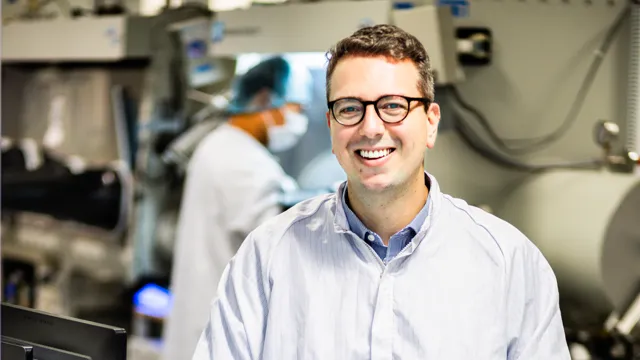
鈥淭ake justice, for example.Fredrik Heintz, professor at the Department of Computer and Information Science at LiU. Photo credit Anna Nilsen Does this mean an equal distribution of resources or that all actors receive the resources needed to bring them all to the same level? We are facing major long-term questions, and it will take time before they are answered. Remember 鈥� the definition of justice has been debated by philosophers and scholars for hundreds of years,鈥� says Fredrik Heintz.
Human centered
The project will focus on large comprehensive research questions, and will attempt to find standards that all who work with AI can adopt. But Fredrik Heintz is convinced that we can only achieve this if basic research into AI is given priority.
鈥淧eople often regard AI as a technology issue, but what's really important is whether we gain societal benefit from it. If we are to obtain AI that can be trusted and that functions well in society, we must make sure that it is centred on people,鈥� says Fredrik Heintz.
Many of the legal proposals written within the EU and its member states are written by legal specialists. But Fredrik Heintz believes that they lack expert knowledge within AI, which is a problem.
鈥淟egislation and standards must be based on knowledge. This is where we researchers can contribute, providing information about the current forefront of research, and making well-grounded decisions possible. It鈥檚 important that experts have the opportunity to influence questions of this type,鈥� says Fredrik Heintz.
The complete roadmap is available at: