
Semiconductors made of silicon form the foundation of all modern electronics. But semiconductors based instead on conductive plastics have a wider range of potential applications, where flexibility is an important factor. Among other things, they could be used in digital displays, solar cells, LEDs, sensors, medical implants and for energy storage.
鈥淲e live in an electronic world where we are using electronics everywhere. Now imagine instead that all electronics were soft and flexible rather than hard and rigid. In that sense, the idea of organic electronics is almost like science fiction,鈥� says Simone Fabiano, professor of materials science at the Laboratory of organic electronics at LiU.
New doping methods
However, conductive plastics are relatively poor conductors of electricity. To improve conductivity and modify the material鈥檚 properties, different impurities are usually added. This is known as doping. The most common dopants used are often highly reactive, expensive, complicated to produce, or all three.
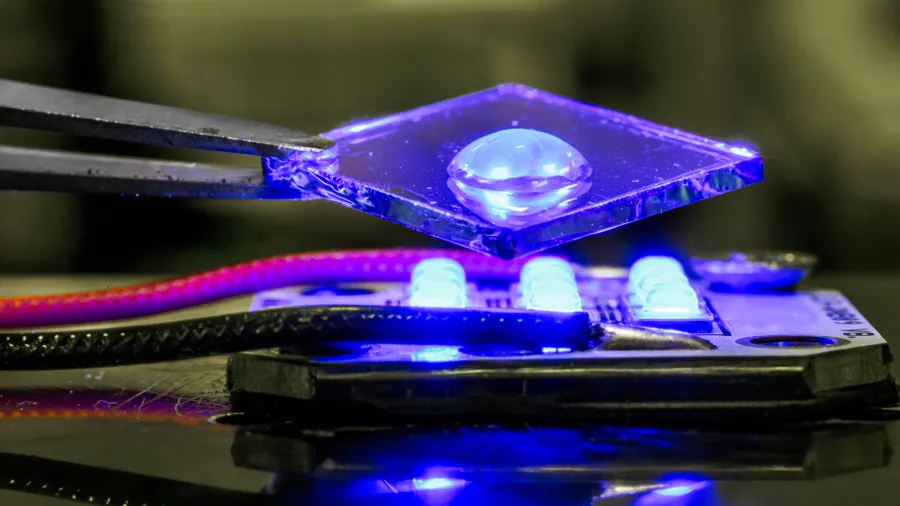 Thor Balkhed
Simone Fabiano believes that organic electronics have great potential to transform our everyday lives. But first, several key challenges must be solved.
鈥淲e are still limited by performance and stability. Being able to solve some of these issues with new doping methods is a key. Then we could create technologies that are unique to organic semiconductors and capable of doing things that silicon cannot.鈥�
Biocompatible
Simone Fabiano explains that organic electronics can be more easily integrated with the human body thanks to the material鈥檚 ability to communicate in the same way as the body鈥檚 nerve cells.
鈥淚n the future, I hope that we will be able to use organic electronics to replace some of our human body parts. This might involve artificial retinas, hearing implants or even giving a sense of touch in prosthetics,鈥� says Simone Fabiano.
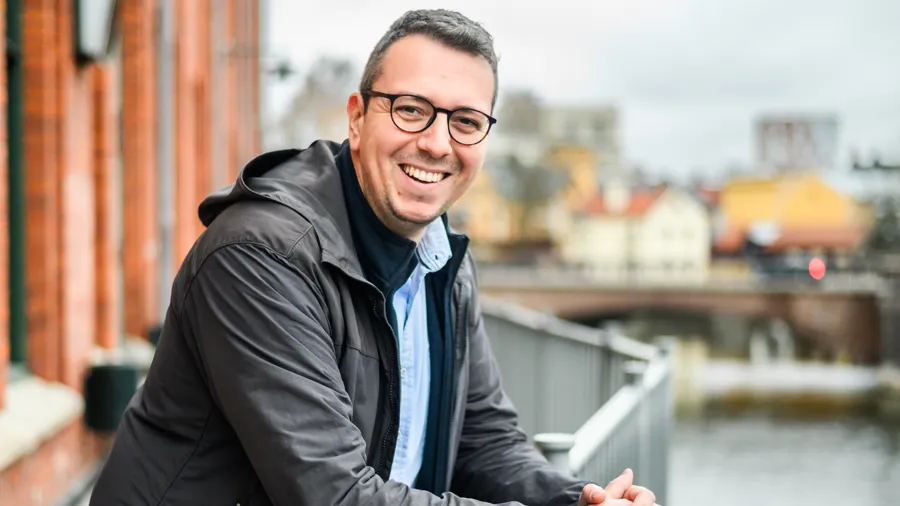 Thor Balkhed
鈥淚t鈥檚 an amazing feeling, especially for everyone who has contributed to this research over the years. So, I see it as a major prize for the entire group, not just for me.鈥�
Royal Swedish Academy of Sciences reviews nominees
Simone Fabiano is one of five prize recipients. The other G枚ran Gustafsson Prize laureates are Emma R. Andersson at Karolinska Institutet, who receives the prize in Medicine; Joanna Rorbach at Karolinska Institutet, who receives the prize in Molecular Biology; Josefin Larsson at Stockholm University, who receives the prize in Physics; and Dan Petersen at Stockholm University, who receives the prize in Mathematics.
Swedish universities and higher education institutions nominate candidates for the G枚ran Gustafsson Prizes, the Royal Swedish Academy of Sciences reviews the proposals, and the prize-winners are then selected by the G枚ran Gustafsson Foundation for Research in Natural Sciences and Medicine. The G枚ran Gustafsson Prizes have existed since 1991. The foundation was established in 1989 following a donation from the entrepreneur and businessman G枚ran Gustafsson (1919鈥�2003). Prize recipients must be no older than 45 and intend to conduct the majority of their research in Sweden.


