鈥淭he programme is long-term and very attractive. One measure of this is that very few researchers have left the programme to pursue a career outside Sweden. The aim was precisely to retain talented Swedish researchers in Sweden and to attract foreign talent, as well as allowing them the space they need to tackle difficult research questions in the long term,鈥� says Peter Wallenberg Jr, chair, Knut and Alice Wallenberg Foundation, in a press release.
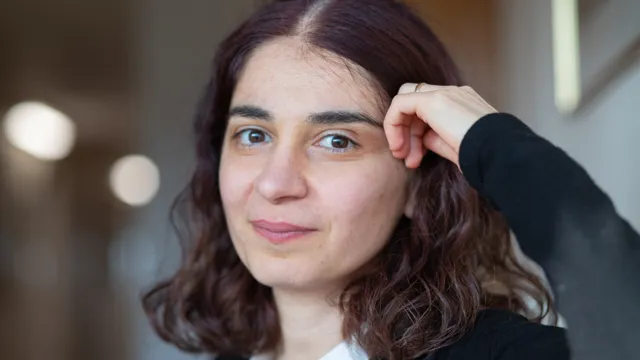
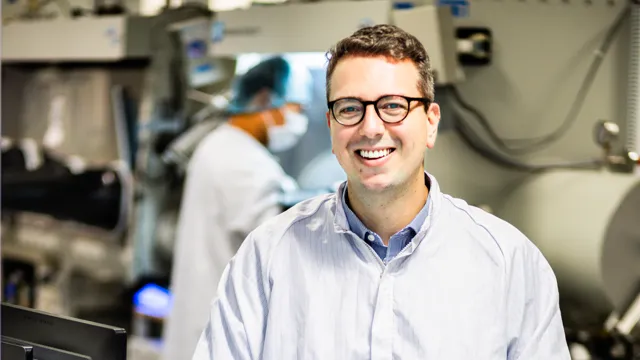
In total, 27 promising researchers under the age of 40 have been appointed as Wallenberg Academy Fellows this year. Two of them are based at Link枚ping University.
Interfacing cars and robots via 6G
Zheng Chen, associate professor at the Department of Electrical Engineering, will develop methods to optimise communication between self-driving cars, robots, and other AI-based systems through 6G connectivity without overloading the network. The core idea is to decentralise artificial intelligence.
The aim is for AI-driven machines to analyse data locally on their own devices while still exchanging information with other units. Learning will take place between the devices, enabling machines to solve tasks collaboratively without relying on a central server.
"With the support of the Wallenberg Academy Fellow program, I hope to further expand my research activities and build an internationally recognized research team focused on efficient and secure decentralized AI. At the same time, the appointment comes with greater responsibility as a research leader and supervisor, to inspire and mentor the next generation of young researchers," says Zheng Chen.
Artificial intelligence that plans
Jendrik Seipp, senior associate professor at the Department of Computer and Information Science, will develop AI systems that can reason more like humans when devising a plan to reach a goal step by step.
"My goal is to develop a new foundation for AI planning that combines the reliability and theoretical guarantees of classical methods with the adaptability of machine learning. I want to make planning systems not only more efficient, but also more interpretable and trustworthy," says Jendrik Seipp.
In his research, he combines the best of both worlds 鈥� machines鈥� ability to learn quickly and humans鈥� rational reasoning. The goal is to develop new AI models so that computers can plan and make decisions in a more reliable way. He is also exploring other approaches to AI planning to see if these can be improved and form the basis for smarter decision-making systems.
"If successful, this project will enable AI to make better decisions in domains such as robotics, transportation, and cybersecurity, and contribute to the development of safer and more transparent AI systems in society, 鈥� says Jendrik Seipp.