一本道

15 April 2024

How can artificial intelligence, AI, improve, for example, health care and local and national public transport? A research group at LiU is working to develop AI for the benefit of society.

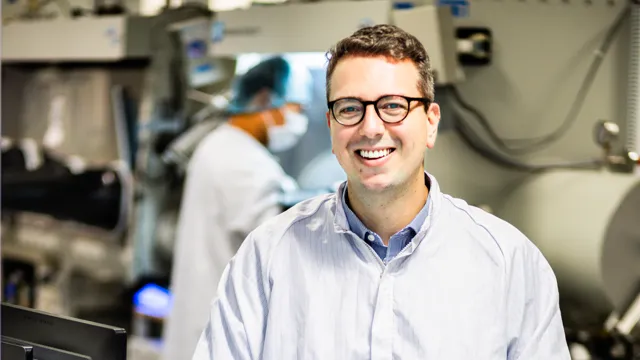
Head shot of a smiling man wearing glasses and a blue shirt Photographer: Charlotte Perhammar
Postdoc Mattias Tiger is part of the research group ReaL (Reasoning and Learning) at the Division of Artificial Intelligence and integrated Computer Systems, which is part of the Department of Computer and Information Science.

The LiU researchers use hybrid AI, an approach that combines different methods from the AI field such as machine learning, reasoning and planning. In this way, they create practically useful systems for specific operations.

Photo credit: Charlotte Perhammar

“We figure out how to implement safe and robust AI systems that work in real life and are reliable,” says postdoc Mattias Tiger.

Many stakeholders want to collaborate with the research group. For example, the researchers have looked at how new AI systems can support several of Region Östergötland’s operations, including health care. The group is also collaborating with the public transport provider Östgötatrafiken and has improved the punctuality of their buses. Current estimated arrival times originate from previous projects where they made major improvements using machine learning. The researchers also have ongoing collaboration projects with the Swedish Transport Administration to improve arrival and departure time estimates for all rail traffic in Sweden. The results have been good, and the research group is now supporting the Swedish Transport Administration in moving the forecast models to production.

A research project with Saab and Ericsson is about coordinating a large number of low-flying objects in society and the safety aspects this would entail. The task of such an object can be to deliver packages, collect inspection data on things such as heat loss in a house or make a three-dimensional map for self-driving vehicles.

Photo credit: Charlotte Perhammar
Mattias Tiger and his colleagues also help large global logistics companies save significant amounts of carbon dioxide by ensuring that ships travelling between, for example, Asia and Europe do not run empty unnecessarily.

The article is also published in LiU magasin.

Contact

ReaL (Reasoning and Learning)

Postdoc Mattias Tiger is part of the research group ReaL (Reasoning and Learning) at the Division of Artificial Intelligence and integrated Computer Systems, which is part of the Department of Computer and Information Science. ReaL also supports organisations in taking digitalisation work further, becoming more data-driven and being able to take advantage of AI.

More about artificial intelligence at LiU

Latest news from LiU

Portr盲tt p氓 man som st氓r i solen bland gr枚na tr盲d p氓 Campus Valla

New professor of economics researches people鈥檚 life chance

Two identical job applications. One with an Arabic-sounding name. This experiment marked the start of Magnus Carlsson鈥檚 research on discrimination and people鈥檚 life chances. He is now a new professor of economics at 一本道 University.

En kvinna som sitter framf枚r en spegel och tittar p氓 sin spegelbild.

How AI changes human decision-making

AI can find patterns that people miss, but it does not automatically lead to better decisions. New research from 一本道 University shows how the roles of humans and AI change depending on the situation and the decision being made.

A woman standing on a balcony next to a building.

She promotes AI for societal good in Europe

Helen Köpman, Alumna of the Year 2026, works at the European Commission鈥檚 AI Office in Brussels. For more than 20 years she has worked with research issues and innovation at EU level, where a living planet for future generations is her driving force.